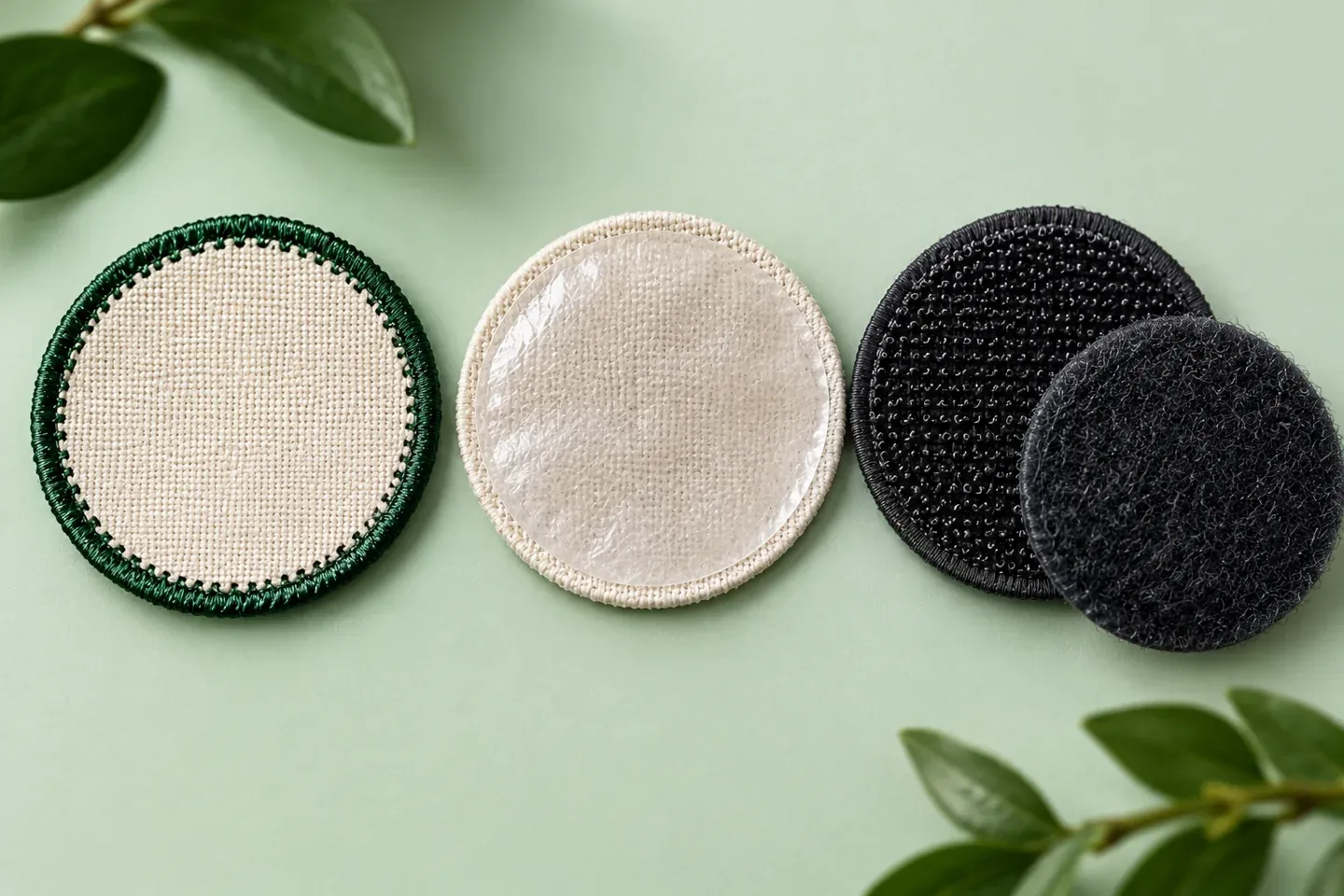
Start with the receiving material
Tell us what the patch will be attached to. Fabric composition, stretch, coatings, thickness and the item’s construction all affect attachment choices. A method that works well on a structured work jacket may be unsuitable for a lightweight stretch garment.
Sew-on
Sew-on attachment joins the patch using stitching. The sewing method and position need to suit the patch border and the receiving item. Consider access behind linings, pockets or cap panels before assuming the patch can be sewn in the desired position.
Iron-on or heat application
Heat-activated backing depends on the backing system and the receiving material. Temperature, pressure and time must follow confirmed application instructions. Test on the actual fabric before committing an entire garment batch.
Do not assume every fabric can tolerate the required heat. Coated, delicate, waterproof or stretch materials may need a different solution.
Hook and loop
A hook-and-loop system can allow removal and replacement. Confirm whether you require the patch side only or both sides of the system, and how the matching base will be attached to the garment or bag.
Test the finished application
An approved loose patch does not verify the attachment on a finished garment. Test the complete combination under its intended use and care conditions. Ask for advice when the item has demanding wash, abrasion or exposure requirements.
Need advice for your artwork?
Send the product type, dimensions, quantity and delivery country. Our team can discuss practical options for your project.
Discuss my project ↗